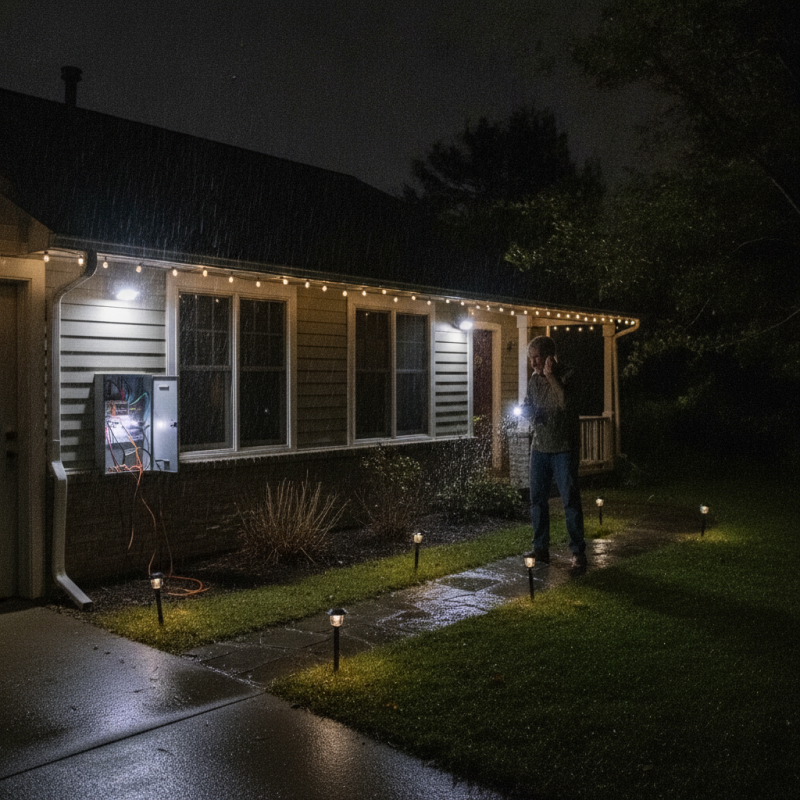
Outdoor LED lights provide safety and ambiance. However, many homeowners face a common issue: flickering. This leads us to the question, "why are my outdoor LED lights flickering at night?"
Understanding this phenomenon requires exploring multiple factors. Dimming or flickering can result from electrical issues. Overloaded circuits or faulty wiring can cause erratic behavior. Weather conditions, such as high winds or rain, may disrupt connections.
Additionally, the types of LED bulbs and their compatibility with fixtures matter. Sometimes, light dimmers are not suited for LED technology. They can lead to flickering problems as well. Homeowners must recognize these elements. Identifying the cause may seem daunting at times. Addressing the flicker not only improves lighting quality but enhances safety. Taking the time to investigate can bring clarity and resolution.
Common Causes of Flickering Outdoor LED Lights at Night
Flickering outdoor LED lights can be frustrating, especially at night. Several common causes may contribute to this issue. One primary reason is voltage fluctuations. If your lights are connected to an unstable power source, they may flicker intermittently. This can occur due to heavy machinery or appliances operating nearby.
Another factor to consider is the quality of the LED bulbs. Low-quality bulbs often have inconsistent light output. Over time, components within the bulb can degrade, resulting in flickering. It is also essential to check the connections. Loose or corroded wiring can disrupt the flow of electricity, leading to flickering issues.
Finally, environmental factors may play a role. High winds, rain, or nearby trees can cause movement, affecting the lights. Sometimes, despite the best attempts, flickering persists. Troubleshooting these issues can feel daunting. However, understanding these causes helps in addressing the problem effectively.
Impact of Voltage Fluctuations on LED Lighting Performance
Voltage fluctuations can significantly impact the performance of outdoor LED lights. These fluctuations may occur due to inconsistent electrical supply or inadequate wiring. For instance, a report from the International Energy Agency indicates that voltage variations in residential areas can often reach ±10%. Such variations can lead to flickering in LED fixtures, causing nuisance and anxiety for homeowners.
LED lights are sensitive to voltage changes. Unlike traditional bulbs, they rely on consistent electrical input. A study by the Electrical Engineering Research Institute found that voltage spikes can reduce an LED's lifespan by up to 30%. When voltage dips below optimal levels, the lights may flicker or dim. This flickering not only affects aesthetics but may also lead to premature failure of the lighting system.
Industry experts recommend checking the voltage supply regularly to ensure stability. Utilizing a voltage stabilizer may also prove beneficial. This device can help smooth out fluctuations, providing a steady input to LED lights. Addressing these issues early on can prevent flickering and prolong the life of the outdoor lighting system. Regular maintenance and monitoring can help maintain optimal performance. It's essential to embrace these practices for improved experiences.
Role of Temperature Changes in LED Light Efficiency
Temperature changes significantly impact LED light efficiency. Outdoor LED lights are designed to operate within certain temperature ranges. When temperatures fluctuate, the performance of LEDs can diminish. For instance, in colder weather, the light output may lessen, leading to flickering. LEDs also struggle to cope with extreme heat, causing rapid wear.
Another factor is thermal management within LED fixtures. If a light is not properly ventilated, it can overheat. This overheating can trigger a flickering effect as the internal components fail to work efficiently. Notice how your lights behave on particularly hot or cold nights. It’s crucial to monitor these changes over time.
Additionally, physical installation plays a role. Poor wiring connections can exacerbate flickering issues. Ensure all connections are secure and insulated against the elements. Regular maintenance can prevent unexpected performance drops. Understanding how temperature affects your outdoor lighting can lead to better choices in installation and upkeep.
Possible Faulty Wiring Issues Leading to Light Flickering
Flickering outdoor LED lights can be frustrating. One common cause is faulty wiring. Damaged or loose connections can disrupt the flow of electricity. This may lead to an inconsistent power supply, resulting in flickering lights. Whether it’s the main power line or wiring within your light fixtures, checking for issues is crucial.
Inspect all connections carefully. Look for exposed wires or corroded terminals. A loose connection can be a minor issue, yet it often causes significant problems. Ensure that all wires are securely fastened. If you notice any damage, it might be a sign to replace the wiring.
Voltage fluctuations can also contribute to flickering. If your home experiences periodic surges or dips in voltage, it can affect the lights. Consider using a multimeter to check the voltage at the fixture. This is a simple but effective way to diagnose the issue. If the voltage is unstable, you may need an electrician to assess the situation. Taking these steps can help restore the smooth operation of your outdoor lights.
Solutions to Prevent Outdoor LED Lights from Flickering
Flickering outdoor LED lights can be frustrating and distracting. Many homeowners experience this issue, particularly at night. Understanding the possible causes is key to finding solutions. For starters, check the wiring connections. Loose or corroded wires can lead to erratic behavior in the lights. Tightening connections or replacing damaged wires may fix the problem.
Another common cause is incompatible dimmer switches. If your outdoor lights are connected to a dimmer designed for incandescent bulbs, flickering can occur. Consider using a compatible dimmer designed for LED lights. Additionally, fluctuations in voltage can impact LED performance. Using a surge protector can help stabilize the voltage.
Lastly, environmental factors might be at play. Strong winds or heavy rain can disturb the power supply, causing lights to flicker. Make sure outdoor fixtures are properly installed and sealed from the elements. Sometimes, seeking the help of a professional electrician may offer better insights. It's okay to acknowledge that troubleshooting this issue can be complex and sometimes requires expert advice.
Why Are My Outdoor LED Lights Flickering at Night? - Solutions to Prevent Outdoor LED Lights from Flickering
| Issue |
Description |
Solution |
| Voltage Fluctuation |
Inconsistent voltage supply can cause LEDs to flicker. |
Install a voltage stabilizer or consult an electrician. |
| Loose Wiring |
Loose or damaged wiring can lead to flickering lights. |
Check and secure all wiring connections. |
| Incompatible Dimmer Switch |
Using a standard dimmer with LEDs can cause flickering. |
Replace with an LED-compatible dimmer switch. |
| Temperature Changes |
Extremely cold or hot temperatures can affect LED performance. |
Use outdoor-rated LEDs designed for temperature variability. |
| Electrical Interference |
Nearby electrical devices may cause interference. |
Keep LED lights away from sources of electrical interference. |
FAQS
: Voltage fluctuations can lead to flickering, reduced lifespan, and dimming of LED lights. Stability is crucial.
LED lights are very sensitive. Unlike traditional bulbs, they require a consistent electrical supply for optimal performance.
Voltage spikes can significantly reduce LED lifespan, potentially by up to 30%. Consistent voltage is essential.
Regularly check voltage supply. Implementing a voltage stabilizer may smooth out fluctuations and ensure steady input.
Faulty or loose wiring can disrupt electricity flow. This inconsistency may result in flickering lights outdoors.
Look for exposed wires or corroded terminals. Ensure all connections are secure to avoid significant problems.
Damaged or loose connections are signs that wiring could be faulty. Replacing them may solve flickering issues.
Using a multimeter can help. This tool allows you to measure voltage accurately and diagnose flickering issues.
Yes, if voltage is unstable or if you're unsure about wiring. An electrician can help assess and fix problems effectively.
Conclusion
Understanding "why are my outdoor LED lights flickering at night" involves examining several common factors. Flickering can often be traced back to voltage fluctuations that affect LED lighting performance. These variations may be caused by electrical supply issues or connections that are not secure, leading to instability in light output.
Additionally, temperature changes can play a significant role in the efficiency of LED lights, as extreme weather can impact their functionality. Another critical aspect is the possibility of faulty wiring, which can cause intermittent flickering. To mitigate these issues, homeowners can ensure all connections are tight, invest in quality equipment, and consider installing voltage stabilizers or surge protectors to enhance the reliability of their outdoor LED lighting setup.