When considering solar street lights, you may ask, "what is the difference between integrated and split solar street lights?" Each type has unique features and benefits. Integrated solar street lights combine the solar panel, light fixture, and battery into one compact unit. This design simplifies installation, making it appealing for many users. They can be mounted easily on poles without needing extensive setup.
On the other hand, split solar street lights separate these components. The solar panel is positioned away from the light fixture, often on rooftops or higher locations. This allows for better sunlight capture and sometimes offers more flexibility in installation. However, it may require a more complex setup.
Choosing between integrated and split solar street lights depends on your specific needs. An integrated model is sleek and less prone to vandalism. A split model can provide better efficiency in certain environments. Both options have pros and cons, and understanding these helps in making an informed decision.
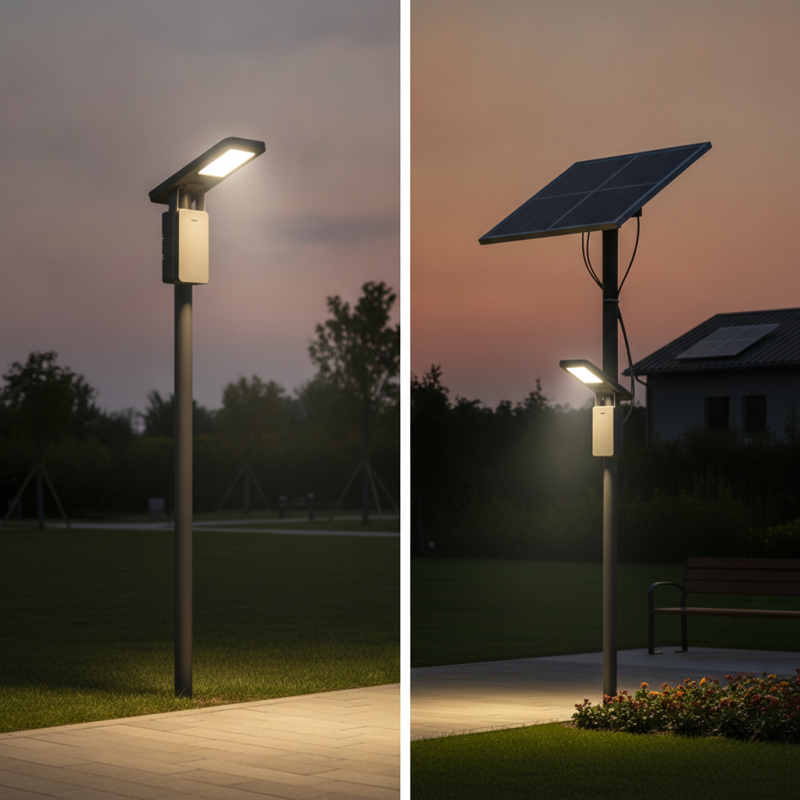
Integrated solar street lights combine solar panels, batteries, and LED lights into one unit. This design simplifies installation and reduces maintenance needs. With all components in one place, they offer a compact solution for urban and rural lighting projects. These lights are powered by sunlight, making them environmentally friendly and cost-effective in the long run.
When choosing integrated solar street lights, consider your solar exposure. Locations with consistent sunlight will benefit the most. However, if your area has frequent shading, these lights may not perform optimally. It's important to assess the environment carefully. In some cases, their energy efficiency might be compromised.
Tips: Look for integrated lights with adjustable brightness settings. This feature can enhance efficiency during low-traffic hours. Additionally, consult with experts who can guide you through the installation process. Ensure you understand local requirements before proceeding. You may still need to rethink your options if street layout or orientation presents challenges.
| Feature | Integrated Solar Street Lights | Split Solar Street Lights |
|---|---|---|
| Design | Compact and all-in-one unit | Separate components (panel, battery, light) |
| Installation | Easier and quicker installation | More complex setup required |
| Maintenance | Lower maintenance due to integrated design | May require more frequent maintenance |
| Cost | Generally lower initial cost | Typically higher initial cost |
| Light Output | Suitable for residential areas | Higher light output for larger areas |
| Solar Panel Orientation | Fixed orientation | Adjustable panel positioning |
Split solar street lights are gaining popularity due to their unique features and advantages. Unlike integrated models, split solar street lights consist of separate components. They typically have a solar panel, battery, and light fixture. This design allows for greater flexibility in placement and installation. For example, you can mount the solar panel in an area with more sunlight, while the light can be positioned in shaded spots.
These lights offer maintenance advantages as well. If one component fails, it can often be replaced individually. This can save time and costs in the long run. However, this feature also requires users to be more aware of each part's condition. Regular inspections are necessary to ensure optimal performance. Sometimes, users overlook the importance of checking battery health.
The installation process can be more complicated due to separate components. Users must ensure proper alignment and connectivity. It may require technical knowledge, which can be a barrier for some. Despite these challenges, split solar street lights remain a reliable choice for urban and rural settings alike. Understanding both the pros and cons is essential for making an informed decision.
When comparing integrated and split solar street lights, performance varies significantly. Integrated solar street lights feature built-in components. The solar panel, battery, and LED are combined into one unit. This design is visually appealing and often easier to install. According to a report by the International Renewable Energy Agency (IRENA), integrated lights can achieve up to 20% more energy efficiency in specific environments.
On the other hand, split solar street lights offer versatility. The solar panel is separate from the light, allowing for optimal sunlight exposure. This can be advantageous in shaded areas where trees or buildings obstruct direct sunlight. A study by the Solar Energy Industries Association (SEIA) indicates that split designs can increase the battery lifespan by 30% due to better thermal management. However, the installation may require more careful planning to ensure proper alignment.
While both systems have their merits, decision-making must consider the installation environment, maintenance needs, and energy goals. Integrated lights may reduce upfront labor but could face challenges in maintenance. Split lights offer flexibility but require more attention to installation details. Each option comes with advantages and drawbacks that require careful consideration based on specific needs.
When budgeting for solar street lights, understanding the cost implications of integrated versus split models is crucial. Integrated solar street lights typically have lower upfront costs due to their all-in-one design. According to a report by the International Renewable Energy Agency (IRENA), integrated systems can reduce installation expenses by up to 30%. This can be appealing, especially for municipalities with tighter budgets.
On the other hand, split solar street lights often come with higher initial costs. However, they provide advantages in terms of maintenance and flexibility. A study by Solar Power World highlights that while split systems may require 10-20% more investment upfront, they can offer improved performance over time. This could lead to lower long-term operational costs.
It’s important to also consider the lifespan and replacement costs associated with each type. Integrated units might need complete replacement after 5-7 years, while split models could last 10-15 years. This discrepancy can significantly impact a project's overall budget. Ultimately, weighing these factors can help you make a more informed decision on solar street lighting options.
When choosing between integrated and split solar street lights, installation and maintenance play crucial roles. Integrated solar street lights, with all components housed within a single unit, offer simpler installation. The compact design often requires less mounting hardware. A study by the Solar Energy Industries Association shows that integrated models can reduce installation time by up to 30%. However, accessibility for maintenance can be limited. If a component fails, the entire unit may need replacement, escalating costs.
On the other hand, split solar street lights provide flexibility in installation. The panel and battery can be positioned separately, allowing for optimal sunlight capture. This design can facilitate easier maintenance, as parts can be replaced individually. Nonetheless, this setup might require more intricate mounting systems and labor. According to a report by the International Renewable Energy Agency, maintenance tasks may increase by 15% due to additional components. The choice ultimately hinges on immediate budget constraints versus long-term operational costs. Each option presents unique challenges worth careful consideration.
: They combine solar panels, batteries, and LED lights into one unit. This design simplifies installation.
They use sunlight for power. This makes them energy-efficient and environmentally friendly.
Assess solar exposure in your area. Frequent shading may lead to poor performance.
Maintenance can be limited. If one part fails, you might need to replace the whole unit.
Yes, some models offer adjustable brightness. This helps conserve energy during low-traffic hours.
Integrated lights are easier to install. But split lights allow better sunlight capture and easier maintenance.
It depends on budget and long-term costs. Both types have unique challenges to consider.
Yes, it’s wise to seek expert guidance. They can help with local requirements and installation processes.
You may need to rethink your options. Layout issues could affect the effectiveness of the lights.
They can be cost-effective long-term. However, consider potential replacement costs if repairs are needed.
The article "Integrated vs Split Solar Street Lights: What Should You Choose?" explores the key differences between these two types of solar street lighting systems. Integrated solar street lights combine the solar panels, battery, and LED light into a single unit, offering a compact design and ease of installation, while split solar street lights separate these components, which can allow for more flexibility in placement and maintenance.
When considering what is the difference between integrated and split solar street lights, performance comparison reveals that integrated models may provide better efficiency in certain conditions, whereas split systems can adapt better to varied environments. The article also discusses cost analysis, highlighting how budgeting for each type might differ based on initial investment and long-term maintenance. Both installation and maintenance factors are important to consider, as they affect the overall functionality and lifespan of the street lighting solutions.
