Choosing the right solar street light begins with one practical question: what is the difference between integrated and split solar street lights? The answer affects installation, maintenance, battery life, and performance during cloudy weeks. Integrated models place the panel, battery, controller, and LED lamp inside one compact housing. Split systems separate these parts, usually mounting the panel above the lamp and placing the battery inside a protected box. Simple in appearance. Different in daily use.
Solar designer Steven J. Strong has said, “Good solar design begins with the site, not the product.” This principle matters on a real road. A tree may shade an integrated panel at four o’clock. A split system can position its panel toward open sunlight. However, its longer cables need careful protection from water, animals, and accidental damage. Integrated units usually install faster, with fewer exposed connections. They can suit pathways, parking areas, and small streets where appearance matters. Their compact design may also make servicing easier.
Neither option wins every project. That is the uncomfortable part. Integrated lights can struggle when battery capacity is limited or panel orientation is poor. Split lights offer more design freedom, but they may require stronger poles and more installation labor. I have seen specifications look impressive until winter shadows reduced charging hours. Product claims deserve checking. Compare battery chemistry, panel wattage, operating temperature, lumen output, and warranty terms. A reliable decision considers local weather, pole spacing, nighttime traffic, and maintenance access—not only the lowest purchase price.
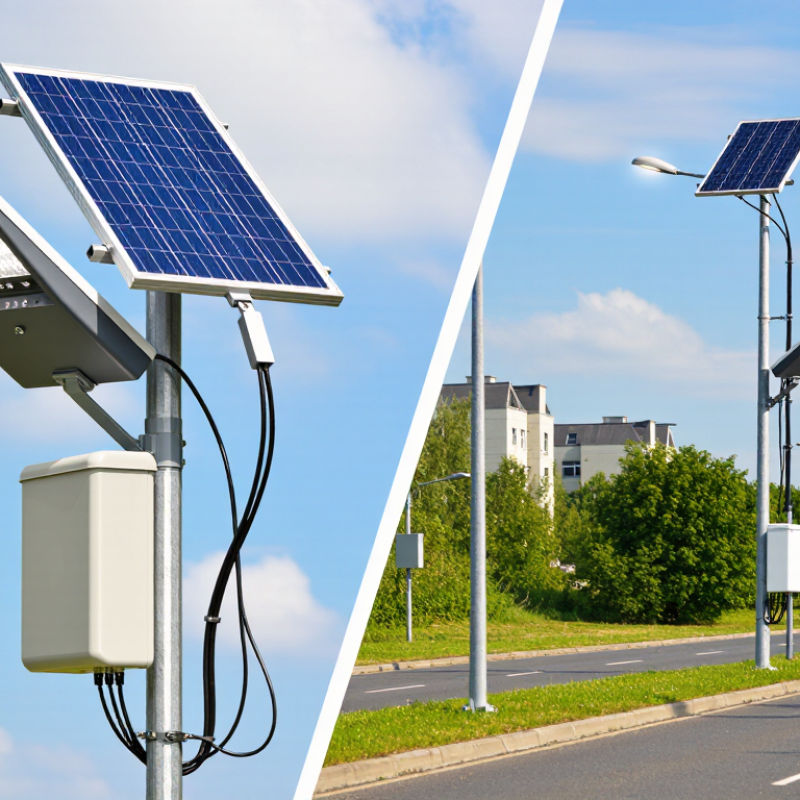
What Are Integrated and Split Solar Street Lights?
Integrated solar street lights combine the panel, battery, LED module, and controller in one housing. The unit sits above the lamp, usually on a standard pole. During daylight, the panel charges the battery. At night, stored energy powers the LEDs through a programmed controller. This compact design reduces cable connections and can speed installation. It is easy to inspect at a glance. However, one housing creates a tight thermal environment. Heat may shorten battery life in hot, dusty locations. Snow, leaves, or bird deposits can also shade the panel.
Split solar street lights separate the solar panel from the lamp body. A cable connects the panel, battery, controller, and LED fixture, depending on the design. Technicians can position the panel toward stronger sunlight while keeping the lamp over the road. This arrangement helps on streets surrounded by trees or tall buildings. It also allows easier access to individual components. More parts mean more connection points. Poor sealing or careless cable routing may invite moisture and faults. Small details matter.
In practical site assessments, I check winter sunlight, pole direction, battery access, and drainage before comparing layouts. A split system is not automatically better. An integrated unit may suit open roads with strong sunlight and limited installation time. Yet its compact design can complicate repairs. Measurements should guide the choice, not appearance alone. Even experienced installers can misjudge seasonal shade.
Integrated vs Split Solar Street Lights: Which Is Better?
Integrated solar street lights combine the solar panel, battery, controller, and LED lamp in one housing, making installation simpler and the overall design more compact. Split solar street lights separate the panel from the lamp, providing greater flexibility for panel positioning, battery access, and maintenance. The scores below use a typical 1–5 engineering rating, where 5 indicates a stronger advantage for the listed criterion.
How Do Integrated and Split Solar Street Lights Work?
Integrated vs Split Solar Street Lights: How Do They Work?
An integrated solar street light places the photovoltaic panel, battery, controller, and LED module inside one compact housing. During daylight, the panel converts sunlight into electricity. The controller regulates charging and protects the battery from overcharging. After sunset, a light sensor activates the LED, often at a programmed brightness. Some systems use motion sensors to increase brightness when people or vehicles approach.
A split solar street light separates the panel from the lamp body. The panel sits on a higher bracket, while the battery and controller remain near the LED or inside a protected enclosure. Cables carry electricity between these components. This layout allows installers to angle the panel toward stronger sunlight, even when the lamp must face a different direction. It can also support larger panels or batteries for roads with longer nighttime demands.
Real installation details matter. Trees, building shadows, dust, and winter sun can reduce daily charging. A panel may look well positioned but still lose afternoon sunlight. Technicians should check solar exposure, battery capacity, cable protection, and the required lighting level before installation. Integrated units usually simplify installation and reduce exposed wiring. Split systems offer more adjustment, but loose connections and water entry deserve careful inspection. Neither design is perfect. A small tilt error can affect performance for years.
What Are the Main Differences Between the Two Designs?
Integrated and split solar street lights follow the same basic energy cycle. A solar panel charges a battery, and the stored power runs an LED lamp after dark. Their main difference is physical layout. An integrated unit places the panel, battery, controller, and lamp in one housing. A split system separates these parts and connects them with cables.
Integrated models usually install faster on narrow paths, courtyards, and small parking areas. Their compact shape creates fewer exposed connections and a cleaner appearance. However, the panel position is often fixed above the lamp. Nearby trees, walls, or buildings may then reduce sunlight. Battery access can also be less convenient. A neat design is not always the easiest to repair.
Split systems offer greater placement flexibility. Installers can position the panel on an open roof or pole section while aiming the lamp toward the road. This arrangement can improve charging where shadows change during the day. It also suits wider roads and locations needing longer nightly operation. The trade-off is more cabling, more mounting work, and more points that need weather protection.
Site conditions should guide the decision. Check daily sunlight, pole height, drainage, wind exposure, and expected maintenance access. Use verified specifications for battery capacity, lighting duration, and enclosure protection. In practice, choosing only by appearance can be a costly mistake. Neither design is perfect.
Which Factors Affect Their Installation and Performance?
Choosing integrated or split solar street lights depends less on appearance than on installation conditions and operating demands. Integrated units place the panel, battery, controller, and LED head together. They install quickly and reduce cable damage. Split systems allow better panel orientation and larger battery capacity. They often suit shaded roads, tall poles, and high-traffic areas.
Solar access is the first performance variable. The IEA PVPS Trends 2024 report recorded more than 400 GW of new photovoltaic capacity worldwide in 2023, but local sunlight still varies sharply. A panel facing nearby trees may lose useful charging hours. Installers should check seasonal shadows, tilt, azimuth, and winter irradiance before selecting equipment. Small errors become visible during cloudy weeks. That matters.
Battery sizing must match lighting hours, weather, and safety requirements. The Global Off-Grid Lighting Association has repeatedly identified affordability and product quality as major market concerns. A cheaper battery can create early replacement costs. Lithium iron phosphate batteries generally tolerate frequent cycling, yet low temperatures and poor charge control still reduce output. IP ratings, drainage, pole vibration, wind loading, and maintenance access also affect reliability.
Integrated lights can be practical for open spaces with strong sunlight and moderate brightness needs. Split lights are usually more flexible where the panel needs a separate, unshaded position. Lighting designers should verify illumination levels against local road standards, not only lumen claims. Real projects are rarely perfect. Designers may also underestimate dust, theft risk, or seasonal rain, and those assumptions deserve review.
How Should You Choose Between Integrated and Split Solar Street Lights?
Choosing between integrated and split solar street lights starts with the site, not the product shape. Integrated models place the panel, battery, controller, and lamp in one housing. They install quickly and look clean on narrow streets or small parking areas. Split systems separate the panel from the lamp and battery. This arrangement allows more freedom when trees, walls, or nearby buildings create shade.
Measure the real sunlight first. A south-facing panel may perform well, but seasonal shadows can change the result. Check winter exposure, rooflines, dust, and nearby growth. Integrated units suit open locations with reliable sunlight and limited installation time. Split systems are often better for shaded roads, larger poles, or projects requiring a larger panel. They can also simplify battery access, though extra cables demand careful protection and inspection.
Look beyond brightness claims. Compare usable lighting hours, battery capacity, charging performance, IP protection, operating temperature, and replacement access. Ask whether the light must remain on all night or only during busy hours. In areas with long cloudy periods, add a sensible energy margin. I have seen systems perform well in summer and disappoint during several rainy weeks. That experience makes conservative sizing more trustworthy than attractive specifications. A practical trial on one pole can reveal glare, shadows, and maintenance problems before wider installation. Sometimes, the less impressive design works better.
FAQS
Integrated lights combine the panel, battery, controller, and LED head. They install quickly and require fewer exposed cables. Split systems separate these parts. They offer greater flexibility for shaded roads and larger energy needs.
Integrated units suit open spaces with strong sunlight and moderate lighting demands. They work well on narrow streets, walkways, and small parking areas. Installation is usually faster. However, their fixed panel position can limit charging performance.
Choose a split design when trees, walls, or buildings create shade. The panel can move to a brighter position. Split systems also support larger panels and batteries. More cable means more inspection work.
Inspect the site during different seasons. Check nearby trees, rooflines, pole direction, dust, and winter sunlight. A panel facing the right direction may still lose hours under afternoon shadows. Small mistakes matter.
Battery capacity should match lighting hours, local weather, and safety needs. Long cloudy periods require a reasonable energy margin. Frequent cycling favors durable battery chemistry. Cold temperatures and poor charging control can still reduce output.
Compare usable lighting hours, battery capacity, charging performance, operating temperature, and weather protection. Check drainage and resistance to pole vibration. Also confirm access for battery replacement. Brightness claims alone are not enough.
Protect cables carefully on split systems. Keep drainage paths clear. Inspect panels for dust and nearby plant growth. Leave enough space for maintenance access. Real sites are messier than plans.
A one-pole trial can reveal glare, shadows, weak illumination, and access problems. Test performance during cloudy and rainy periods. Summer results may look excellent. I might still underestimate winter difficulties. Conservative sizing is usually safer.
Conclusion
Integrated and split solar street lights are two practical designs for outdoor lighting, each combining solar energy with LED illumination. An integrated unit places the solar panel, battery, controller, and lamp in one compact housing, making it simple to transport and install. A split system separates the panel from the lamp and battery, allowing greater flexibility in positioning and component sizing. Understanding what is the difference between integrated and split solar street lights helps users select a solution that matches their project requirements.
The main differences involve structure, installation, maintenance, energy collection, and performance. Integrated lights usually require less wiring and offer a cleaner appearance, while split lights can capture sunlight more effectively when the panel needs to be installed away from shade or adjusted independently. Site conditions, sunlight availability, lighting duration, weather, pole design, battery capacity, and maintenance access all influence the final choice. Integrated models suit straightforward installations and limited spaces, whereas split systems are often preferable for larger areas, challenging layouts, or projects requiring more customization.

