Top 10 Reasons Why Solar Street Lights Stop Working

Time:2026-06-06 Author:Oliver
0%

Solar street lights have emerged as a sustainable solution for urban lighting. Many cities are adopting this technology to reduce energy costs and lower carbon footprints. However, a concerning issue arises: why do solar street lights stop working after a few months? Understanding the root causes is essential for effective maintenance and reliable performance.

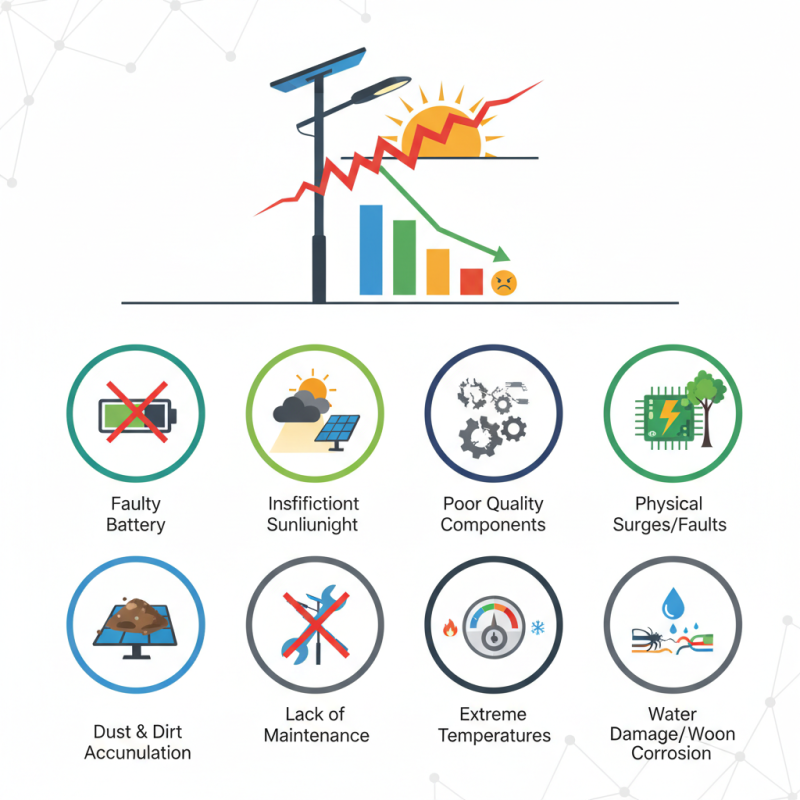
Several factors contribute to the premature failure of these systems. Poor-quality components can lead to malfunction. Faulty batteries may not hold a charge, resulting in unreliable operation. Additionally, insufficient sunlight exposure can hinder the charging process. This often goes unnoticed until the lights fail completely.

When investing in solar street lights, one must consider these aspects. Choosing reputable manufacturers ensures better durability and performance. Regular maintenance checks can help identify potential problems early. Addressing these common issues will enhance the longevity and efficiency of solar street lighting systems. Ignoring them may lead to frustration and increased costs for municipalities.
Top 10 Reasons Why Solar Street Lights Stop Working

Common Causes of Solar Street Light Malfunctions

Solar street lights are a sustainable solution for urban lighting. However, they can face several issues that lead to malfunctions. One common problem is insufficient sunlight. If the solar panels are not properly positioned, they may fail to collect enough energy. This often happens in areas with tall buildings or trees. Regular maintenance can help ensure panels receive optimal sunlight.

Another frequent cause of failure is battery degradation. Solar street lights rely on batteries for power storage. Over time, these batteries can lose their capacity due to weather conditions and age. Users may overlook this aspect until the lights stop working. Regular checks on battery health can prevent unexpected outages.

Additionally, poor wiring connections can lead to failures. Loose or damaged wires may interrupt the flow of electricity. This can occur during installation or from environmental wear and tear. Local factors like heavy rain or storms can accelerate this issue. Regular inspections are advisable to mitigate wiring problems and enhance reliability.

Battery Issues and Their Impact on Performance

Battery issues are one of the main reasons solar street lights fail. A recent industry report indicated that over 40% of solar light malfunctions are due to battery-related problems. These problems can stem from poor battery quality, incorrect sizing, or even environmental factors. For instance, extreme temperatures can significantly affect battery performance, leading to reduced efficiency.

Another aspect to consider is maintenance. Many users overlook regular checks on battery health. According to the International Renewable Energy Agency (IRENA), approximately 30% of solar installations do not perform optimally due to inadequate maintenance. Ensuring that batteries are properly maintained can extend their lifespan. In many cases, replacing a battery can restore functionality, yet some users may not recognize early warning signs of battery degradation.

Finally, the charging process plays a crucial role in battery performance. Insufficient sunlight exposure limits battery charging, exacerbating potential issues. Studies have shown that solar street lights require at least 4-6 hours of direct sunlight each day for optimal battery charge. If the lights are installed in shaded areas, their performance can be severely affected. Users must consider the installation site to enhance reliability and longevity.

Defective Solar Panels: How They Affect Lighting Systems

Defective solar panels can severely impact the performance of solar street lighting systems. When a solar panel malfunctions, it can directly affect the energy it harvests. If the panel does not receive adequate sunlight or is damaged, the entire system may fail to operate. This results in prolonged dark periods in public spaces, which could pose safety risks.

Over time, various factors contribute to the deterioration of solar panels. Environmental pollutants, harsh weather, and physical impacts can lead to cracks or loss of efficiency. Routine inspections are essential, yet many systems lack this maintenance. A poorly maintained solar panel may produce insufficient power to keep lights functioning, leading to frustration for municipalities and residents alike.

Moreover, defective panels don’t just stop working; they limit the lifespan of an entire street lighting setup. When one component fails, it often leads to further complications. Without proper attention, a simple issue can balloon into a costly problem. Understanding these risks is crucial for ensuring effective and sustainable street lighting solutions.

Top 10 Reasons Why Solar Street Lights Stop Working

Weather Effects on Solar Street Light Operation

Weather significantly affects the operation of solar street lights. Rain, snow, and extreme temperatures can reduce their efficiency. A heavy downpour might lead to moisture accumulation in the solar panel casing. This can impede light production and ultimately stop them from functioning. Additionally, snow-covered panels block sunlight, limiting energy absorption.

Cold temperatures can also impact battery performance. Lithium-ion batteries, commonly used in solar street lights, tend to exhibit reduced capacity in frigid conditions. This results in shorter operational hours. On particularly hot days, overheating can damage internal components. Proper ventilation is crucial to mitigate this issue.

Weather events can also cause physical damage. Strong winds might knock over lights or uproot them entirely. Debris from storms can obstruct solar panels. The combination of these factors creates a challenge for reliable operation. Regular maintenance and weatherproof designs play important roles in enhancing durability. Addressing these weather-related challenges can significantly extend the lifespan and functionality of solar street lights.

Improper Installation and Maintenance Practices to Avoid

Improper installation and maintenance practices severely affect the performance of solar street lights. Research indicates that about 30% of solar lighting failures stem from inadequate installation. For instance, incorrect mounting heights can lead to inefficient solar panel exposure, reducing energy absorption significantly. Solar panels should ideally be tilted at angles that maximize sunlight capture, yet many are installed flat, missing optimal performance by large margins.

Maintenance is equally critical. Studies show that neglecting regular cleaning can decrease energy efficiency by up to 25%. Dust and debris on solar panels block sunlight and reduce the charge stored for night-time operation. Moreover, faulty wiring connections can lead to energy loss, inhibiting the functionality of the lights. Regular inspections are necessary to identify such issues before they escalate.

Choosing the right location for installation is crucial. Poorly lit areas may require additional lighting fixtures to avoid dark spots caused by obstructions like trees or buildings. If not addressed, these inadequacies can result in lights that flicker or fail altogether. Recognizing these factors can help enhance the reliability of solar street lights in urban settings.

Top 10 Reasons Why Solar Street Lights Stop Working - Improper Installation and Maintenance Practices to Avoid

Reason Description Impact Solution
Poor Location Installed in shaded areas, limiting sunlight. Reduced solar energy absorption. Choose optimal locations for installation.
Incorrect Wiring Wiring not properly connected or configured. Lights may not function at all. Ensure correct wiring and connections.
Battery Problems Old or defective batteries failing to hold charge. Reduced operational time. Regular battery checks and replacements.
Controller Failure Malfunctioning solar charge controller. Inconsistent light operation. Inspect and replace faulty controllers.
Insufficient Maintenance Lack of regular cleaning and inspection. Diminished performance over time. Establish maintenance schedule.
Weather Damage Exposure to extreme weather conditions. Physical damage to the system. Use weather-resistant materials.
Overloading Exceeding the rated load capacity of lights. Potential failure of lighting system. Ensure correct load ratings are adhered to.
Connector Corrosion Corrosion of electrical connectors over time. Intermittent or failed connections. Use corrosion-resistant materials.
Poor Quality Components Using subpar materials or parts. Shortened lifespan and reliability. Invest in high-quality components.
User Negligence Lack of user knowledge and improper use. Damage or malfunction. Educate users on proper use and care.

FAQS

: What causes solar street lights to malfunction?

: Common causes include insufficient sunlight, battery degradation, and poor wiring connections.

How does insufficient sunlight affect solar street lights?

If solar panels aren’t well-positioned, they may not collect enough energy, often due to buildings or trees nearby.

What impact does battery degradation have on solar lights?

Over time, batteries lose capacity due to age and weather, leading to unexpected outages if not regularly checked.

How can poor wiring connections lead to failures?

Loose or damaged wiring interrupts electricity flow, often caused by installation issues or environmental wear and tear.

Why is maintenance important for solar street lights?

Regular checks ensure optimal performance and can prevent frequent malfunctions, especially with battery health and wiring.

How does weather affect solar street light operation?

Rain, snow, and extreme temperatures can reduce efficiency, impair energy absorption, and even cause physical damage.

What’s the effect of extreme temperatures on battery performance?

Cold conditions reduce battery capacity, while heat can damage internal components, affecting overall functionality.

How does the installation site influence solar light reliability?

Lights placed in shaded areas may not receive enough sunlight, limiting battery charging and overall performance.

What maintenance issues are often overlooked by users?

Many users neglect regular battery checks, leading to performance drops and unrecognized signs of degradation.

How does weatherproof design contribute to solar street light longevity?

A well-designed solar light can withstand harsh weather, ultimately extending its life and maintaining functionality.

Conclusion

Solar street lights offer a sustainable lighting solution, but many users find themselves asking, "why do solar street lights stop working after a few months?" Several common causes contribute to these malfunctions. One significant issue is battery performance; if the battery is not adequately charged or experiences deterioration, the lights may fail to operate effectively. Additionally, defective solar panels can result in insufficient energy collection, directly impacting the lighting system's functionality.

Weather conditions also play a crucial role, as extreme temperatures or prolonged overcast days can hinder solar energy generation. Furthermore, improper installation and maintenance practices can lead to operational failures, emphasizing the importance of adhering to recommended guidelines. Understanding these factors can help users mitigate issues and ensure that solar street lights function reliably for the long term.

Oliver

Oliver

Oliver is a seasoned marketing professional with a wealth of expertise in driving brand awareness and engagement. With a deep understanding of our company's product offerings, he consistently delivers high-quality content that enriches our professional blog. His insights not only shed light on......