How to Install Solar Flood Lights on Concrete Wall Easily?

Time:2026-06-06 Author:Sophia
0%

When it comes to installing solar flood lights on a concrete wall, expertise truly matters. Renowned lighting expert, John Smith, emphasizes, "The right technique can make all the difference." With the growing popularity of solar flood lights, knowing how to install solar flood lights on a concrete wall efficiently is essential for optimal functionality.

Concrete walls present unique challenges for installation. Their rigid surface requires careful planning and precise execution. Selecting the right tools and techniques can simplify the process significantly. Many people overlook the need for proper anchoring and alignment, which can lead to issues down the line. It’s crucial to understand that these steps can impact the longevity and effectiveness of your solar lights.

Incorporating solar flood lights into your outdoor space can enhance security and ambiance. However, forgetting key installation details can diminish their effectiveness. Make sure to assess your wall’s condition and choose suitable mounting hardware. Properly spaced lights not only enhance visibility but also improve aesthetics. Mastering how to install solar flood lights on a concrete wall is about blending functionality with an attractive setup.
How to Install Solar Flood Lights on Concrete Wall Easily?

Understanding Solar Flood Lights: Features and Benefits

Solar flood lights are an excellent choice for outdoor lighting. They offer several features that enhance security and aesthetic appeal. These lights harness sunlight during the day to provide illumination at night. Their energy efficiency is a major benefit, reducing electricity costs. Many models come with motion sensors, which can deter intruders effectively.

Installation is usually straightforward, but it can be tricky on concrete walls. You might need specific tools and anchors to secure the lights. A common mistake is misjudging the position of the solar panel. Ensure it receives optimal sunlight without obstructions. Some users also find it challenging to balance brightness and duration of light.

In harsh weather, solar flood lights can underperform. Regular maintenance, like cleaning the solar panel, is essential for longevity. Users may also wish for better battery life. The design of some lights can limit their brightness. It’s necessary to choose a model that meets your needs while providing reliable performance.

Solar Flood Lights Features Comparison

This bar chart compares the features of three different solar flood light models. The dimensions include brightness in lumens, battery life in hours, solar panel power in watts, and water resistance rating (IP). Each model is represented by its respective dataset, illustrating the advantages of various solar flood lights.

Selecting the Right Solar Flood Lights for Your Needs

When selecting solar flood lights, consider your specific needs. Think about where you plan to install them. The light's brightness is crucial. A lumens rating can help you gauge this. More lumens mean brighter light, which is necessary for larger areas.

Check the battery capacity. A larger battery offers a longer runtime. Look for lights with at least 4 to 6 hours of nighttime illumination.
Durability is also essential. Ensure the lights can withstand your local weather conditions, including rain, wind, and snow.

Keep the design in mind. Choose a style that complements your space. Some lights offer adjustable angles for better coverage. Evaluate user reviews to ensure reliability. A design flaw can lead to performance issues. While appealing options exist, practical functionality is vital. These factors play significant roles in your long-term satisfaction.

Tools and Materials Needed for Installation on Concrete Walls

When installing solar flood lights on concrete walls, having the right tools and materials is crucial. A standard toolkit should include a drill with a masonry bit, a measuring tape, a level, and a hammer. These tools ensure precise holes and proper alignment when mounting the lights. According to a study from the National Renewable Energy Laboratory, proper installation increases solar light efficiency by up to 30%.

Materials needed include anchors suitable for concrete, screws, and weather-resistant sealant. Masonry anchors are essential for securing the flood lights firmly. Recommendations suggest using stainless steel screws to prevent rust. Additionally, a weather sealant protects against moisture, which can corrode fixtures. A survey conducted by the Solar Energy Industries Association indicates that improper installation can reduce light lifespan significantly.

While installation appears straightforward, many face challenges. Poorly measured holes can lead to misalignment. Installing too high or too low may result in inadequate lighting. It is also advisable to check sunlight exposure during different times of the day. Solar lights need adequate sunlight to maintain their charge effectively. Regularly analyzing your setup can prevent pitfalls, ensuring your flood lights perform optimally over time.

Step-by-Step Installation Process for Solar Flood Lights

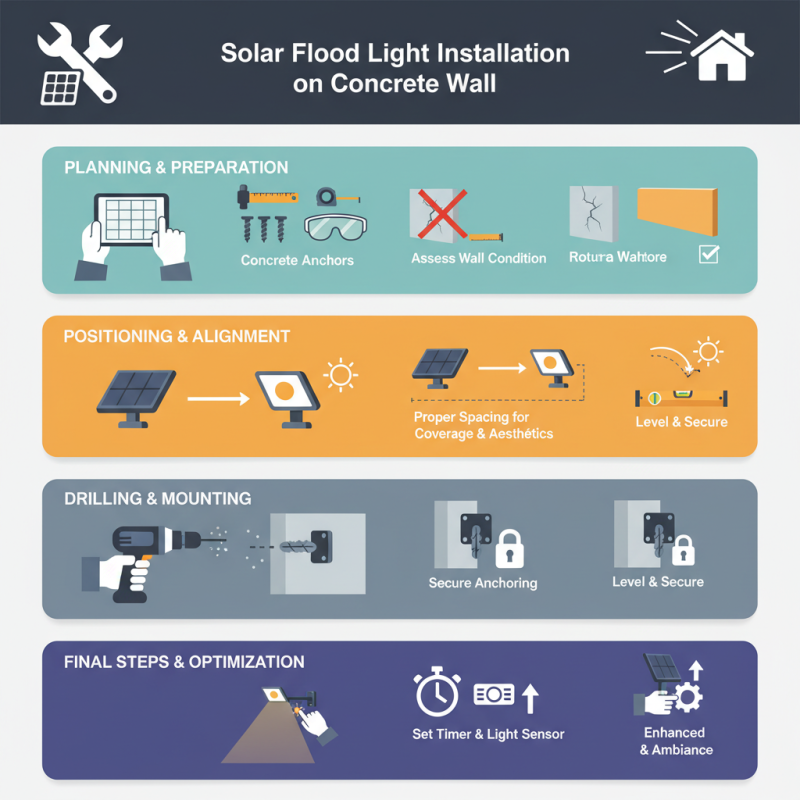
Installing solar flood lights on a concrete wall can seem daunting. However, with a proper approach, it becomes easier. Start by selecting the ideal location on the wall. Ensure it receives adequate sunlight during the day, as this will maximize the lights’ efficiency. Use a measuring tape to position the lights at an appropriate height. The recommended height is around 6 to 8 feet to avoid obstructions.

Next, gather the necessary tools. You will typically need a drill, screws, and a level. Mark the drill holes with a pencil. If you don’t measure carefully, alignment issues may arise. Drill holes into the concrete, making sure to wear protective gear. Insert wall anchors if required, as these will provide stability. After securing the light fixture, adjust it to an optimal angle. Not everyone gets this part right on the first attempt, and that’s okay.

Finally, connect the solar panel as directed. It is crucial to keep the panel unobstructed. Test the lights at night to make sure they function correctly. Some may not shine as brightly as expected. This might require adjusting the angle or changing the position. Always take time to reflect on your installation process, as each attempt improves your skills.

Maintenance Tips for Optimal Performance of Solar Flood Lights

Maintaining solar flood lights is crucial for optimal performance. Regular cleaning is essential. Dust and debris can hinder sunlight absorption. A simple rinse with water or gentle wiping can enhance efficiency. Reports indicate that cleanliness can increase solar panel efficiency by 20% or more.

Battery care plays a significant role. Many solar lights rely on rechargeable batteries. Over time, these batteries can degrade. Replacing them every 1 to 2 years, depending on usage, might be necessary. Some experts suggest monitoring battery performance closely to gauge when replacements are needed.

Positioning is another factor to consider. Ensure your solar lights receive ample sunlight throughout the day. Shady spots reduce energy accumulation. Regularly evaluate their placement to guarantee they receive maximum sunlight. Adjusting their angles can also help capture more light, potentially improving brightness during the night.

FAQS

: What are solar flood lights?

: Solar flood lights provide outdoor illumination powered by sunlight. They enhance security and aesthetics.

How do solar flood lights work?

They capture sunlight during the day and light up at night. This reduces electricity costs significantly.

What features do solar flood lights commonly have?

Many models include motion sensors to deter intruders and offer energy efficiency for cost savings.

What tools are needed for installation on concrete walls?

Essential tools include a drill with a masonry bit, measuring tape, level, and hammer for precise mounting.

What materials are necessary for the installation?

You’ll need masonry anchors, screws, and weather-resistant sealant to secure and protect the lights.

What installation mistakes should be avoided?

Misjudging the position of the solar panel can block sunlight. Ensure optimal placement to maximize efficiency.

Why is regular maintenance important for solar lights?

Regularly cleaning the solar panel extends the lights' longevity by ensuring they charge effectively.

What challenges do users face with solar flood lights?

Users may struggle with brightness, duration of light, and finding optimal mounting height for best performance.

How can improper installation affect solar flood lights?

Poor installation can significantly reduce lifespan and efficiency. It’s crucial to measure accurately and check sunlight exposure.

What should I consider when choosing a solar flood light?

Analyze your specific needs for brightness and battery life to select a model that fits your requirements.

Conclusion

Installing solar flood lights on a concrete wall can enhance outdoor lighting efficiently and effectively. To begin, it's essential to understand the features and benefits of solar flood lights, which include energy efficiency and ease of maintenance. Selecting the right model tailored to your specific needs is crucial for achieving optimal illumination.

Before starting the installation process, ensure you have the necessary tools and materials at hand. The step-by-step installation will guide you through securely mounting the lights on concrete surfaces, ensuring they receive adequate sunlight for charging. Lastly, incorporating maintenance tips will help keep your solar flood lights performing at their best over time. By following these guidelines on how to install solar flood lights on a concrete wall, you can enjoy a well-lit outdoor space effortlessly.

Sophia

Sophia

Sophia is a dedicated marketing professional with an exceptional depth of knowledge about her company's products and services. With a keen understanding of market trends and customer needs, she crafts insightful blog posts that not only inform but also engage readers, enriching the company’s online......